Dido, also known as Elissa, was a Phoenician princess from the prosperous city of Tyre, in present-day Lebanon, renowned for producing the highly prized Tyrian purple dye. She was the daughter of King Mutto and sister to Pygmalion. Recognizing Pygmalion’s impulsive and aggressive nature, the king intended for both his children to jointly rule Tyre, aiming to balance his son’s hot-headed disposition with Dido’s intelligence and diplomatic skills.
However, upon their father’s death, Pygmalion seized sole control of the throne, disregarding his father’s wishes. Consumed by greed and ambition, he murdered Dido’s husband, a high priest who possessed considerable wealth. Fearing for her own life, Dido fled Tyre with her loyal followers and her husband’s treasures. She carried with her the idol of the goddess Tanit, leaving behind Ba’al, the god of storms and fertility, who was venerated in Tyre as the supreme deity while Tanit was considered his consort.
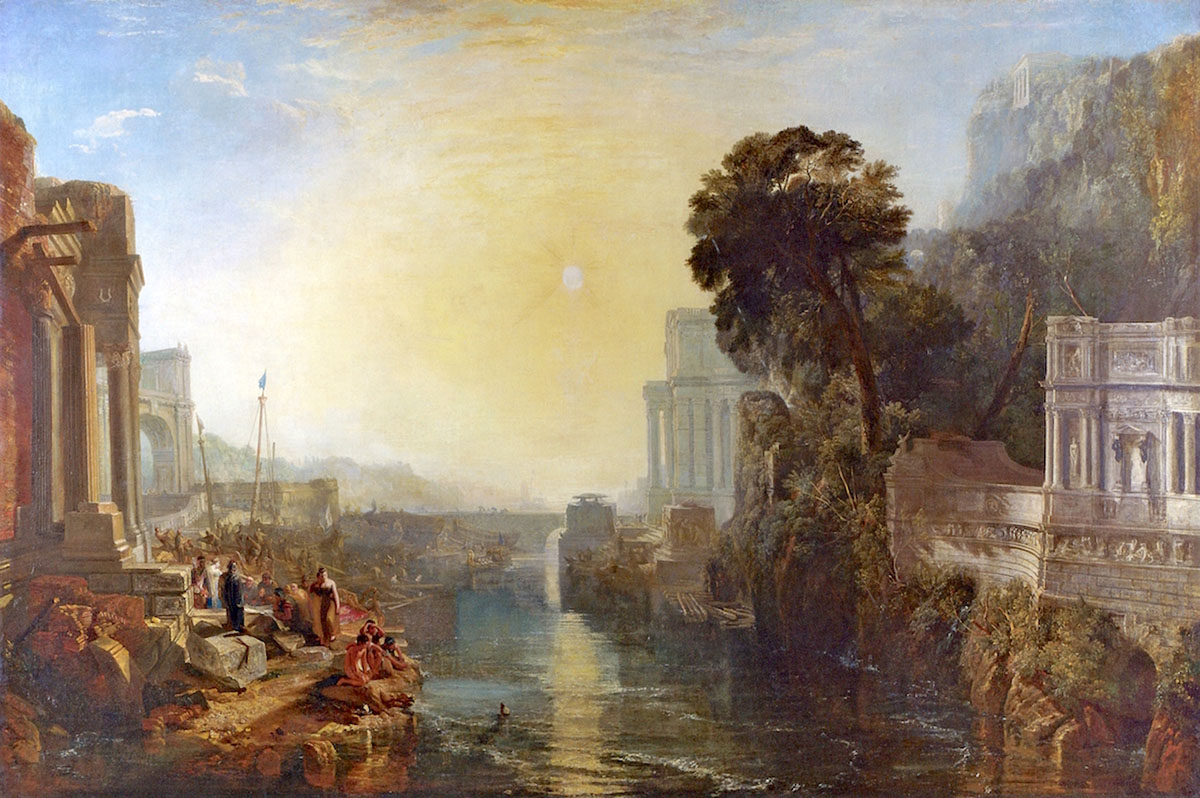
J. M. W. Turner’s The Rise of the Carthaginian Empire (1815)
Dido’s journey led her to the North African coast, in present-day Tunisia, where she founded Carthage around 814 BCE. Upon arrival, Dido sought land to establish her new city. The local ruler, attempting to deter her, offered only as much territory as could be encompassed by an oxhide. Demonstrating her cleverness, Dido cut the hide into thin strips, encircling a substantial area that would become her new home.
The first site chosen for settlement yielded an ox’s head, an omen of toil and servitude. Refusing such a destiny, Dido moved her encampment to another hill, where a horse’s head was unearthed, a sign of power, independence, and victory. She named this hill Byrsa, and there she founded Carthage, the city that would rise to dominate the western Mediterranean.
Tanit, the celestial goddess, became the principal deity of Carthage, a divine protector whose presence reflected the very essence of Dido herself. In many ways, the queen and the goddess became inseparable: one a mortal founder securing Carthage’s future, the other a deity safeguarding its destiny. Their legacies intertwined, reflecting the synthesis of leadership and divine protection that defined Carthaginian society.
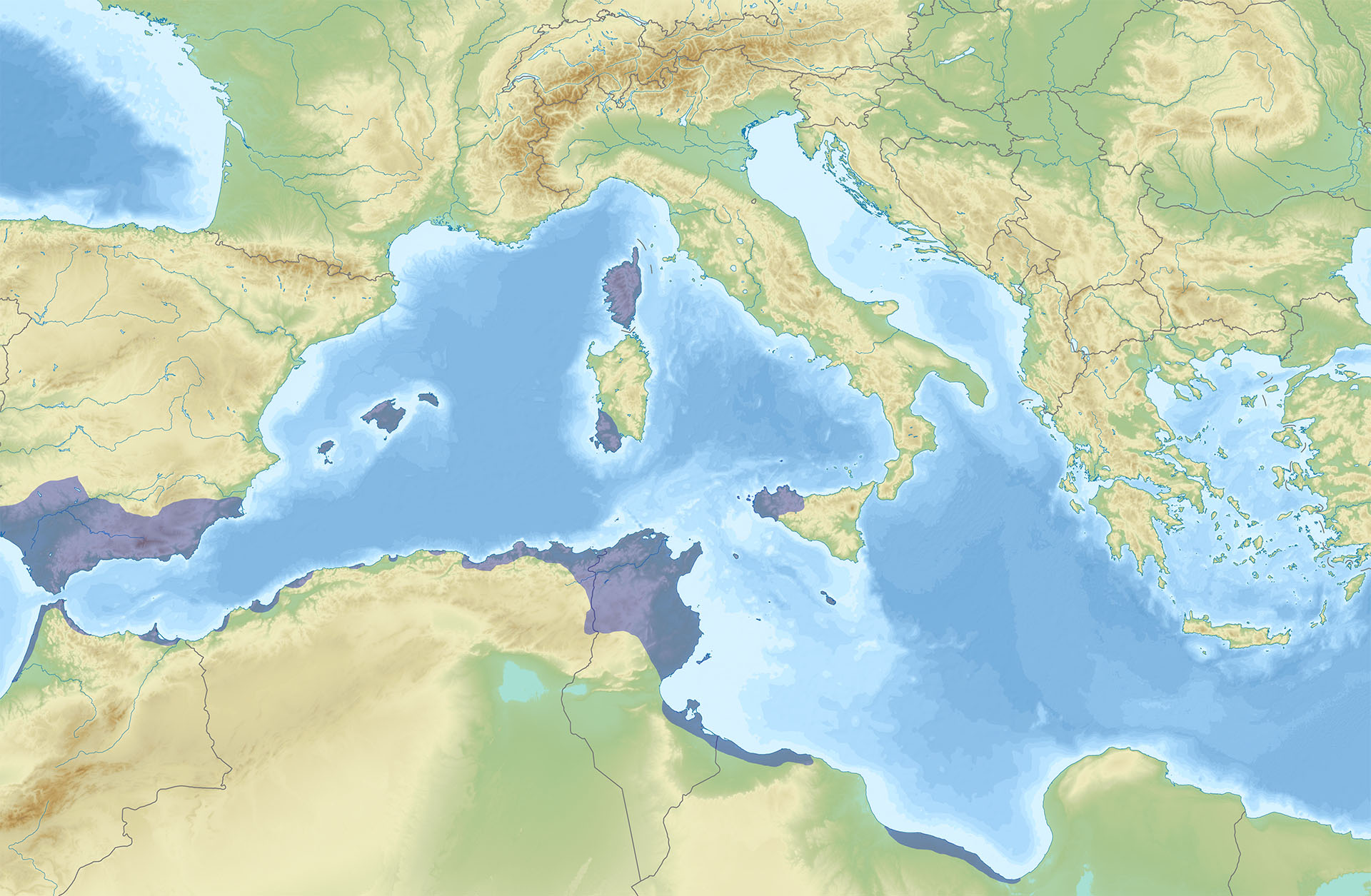
The city-state of Carthage and territories under its political control or commercial influence, circa 264 BC (before the First Punic War)
Tanit, the celestial goddess, became the principal deity of Carthage, a divine protector whose presence reflected the very essence of Dido herself. Their legacies intertwined, reflecting the synthesis of leadership and divine protection that defined Carthaginian society. Carthaginian coins frequently featured the image of Tanit on the obverse and the proud horse’s head of the Byrsa on the reverse, a consistent iconography found across the Mediterranean from Palermo to Cadiz.
The Dido collection represents a shift from traditional jewellery to the curation of archaeological art. We approach these objects as recovered fragments to become a contemporary piece of jewellery with a historical soul to be worn daily.
The collection is anchored by its source artefacts, like genuine silver earrings dating back 2,800 years, to the very era of Dido herself. These diminutive, weathered shapes crafted in antiquity serve as the aesthetic DNA for our modern Byrsa pieces, such as the Byrsa Earrings and Byrsa Ring. By treating the “find” as the protagonist, Dido celebrates women who, like the Queen of Carthage, possess the resilience and intelligence to unearth their own destinies.