The ancient Egyptians had an extraordinary fascination with gold and coloured gemstones. Men and women of the royal court wore them in abundance, while expeditions travelled considerable distances in search of rare and beautiful materials. Pliny the Elder tells us the story of one such discovery.
Somewhere in the Red Sea lay an elusive island, difficult to reach and often shrouded in mist. Eventually, an explorer made his way to its shores. There, among the rocks and sand on the beach, he discovered remarkable lime-green stones, the gemstone we know today as peridot. He brought them back to Thebes and presented them to Queen Berenice, wife of Ptolemy I. We can imagine that a discovery of such beauty did not go unrewarded.

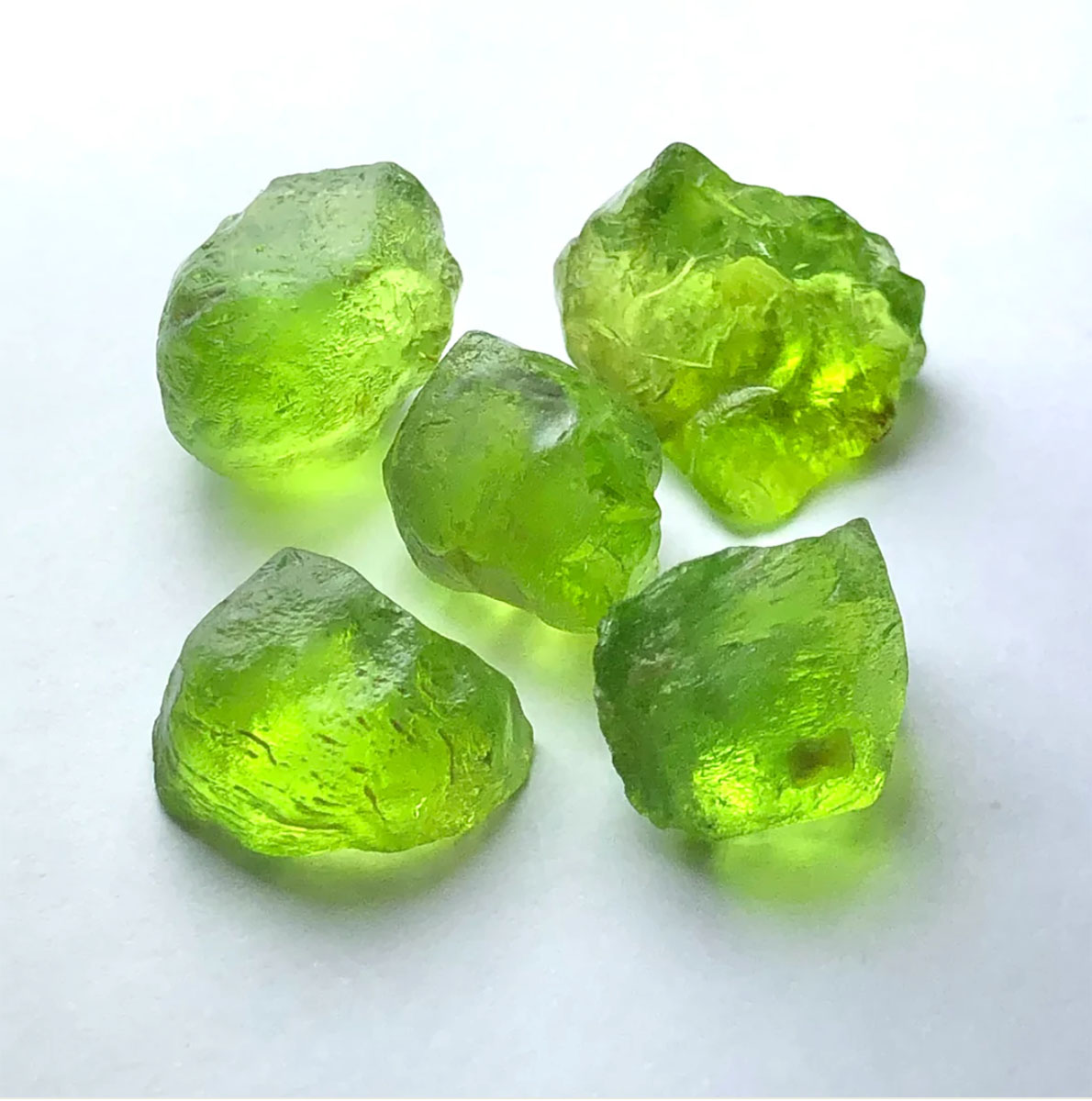
Berenice lived in a world in which gemstones were valued for their particular powers: they could protect and heal, avert danger and carry religious or symbolic meaning. At the Ptolemaic court, where Greek and Egyptian traditions met, such beliefs belonged to a much older understanding of precious stones. The newly discovered green stone, however, had yet to acquire such a history.
“I first learned about the discovery of peridot in ancient Egypt while studying coloured gemstones at IGI. Pliny tells the story, so of course I had to find the passage and read it for myself. It was fantastic, it immediately fuelled my imagination. What would Queen Berenice do with such a gem? Pairing peridot with amethyst seemed almost inevitable: green and purple sit opposite each other on the colour wheel, while amethyst had already been mined for centuries by expeditions sent out by the Egyptian pharaohs.”
Renilde Vervoort
Amethyst was known to the ancient Egyptians as ḥsmn. During the Middle Kingdom, royal expeditions funded by the pharaoh travelled to the mines at Wadi el-Hudi in the Eastern Desert in search of the purple gem. The inscriptions they left behind reveal the importance attached to these missions: the rich veins of amethyst hidden in the desert were understood as treasures revealed by the gods to the ruler, a reward for his divine favour. Amethyst also possessed protective power. The Coffin Texts prescribe amethyst beads for ritual use, while the stone appears in the wider Egyptian tradition of protective amulets.
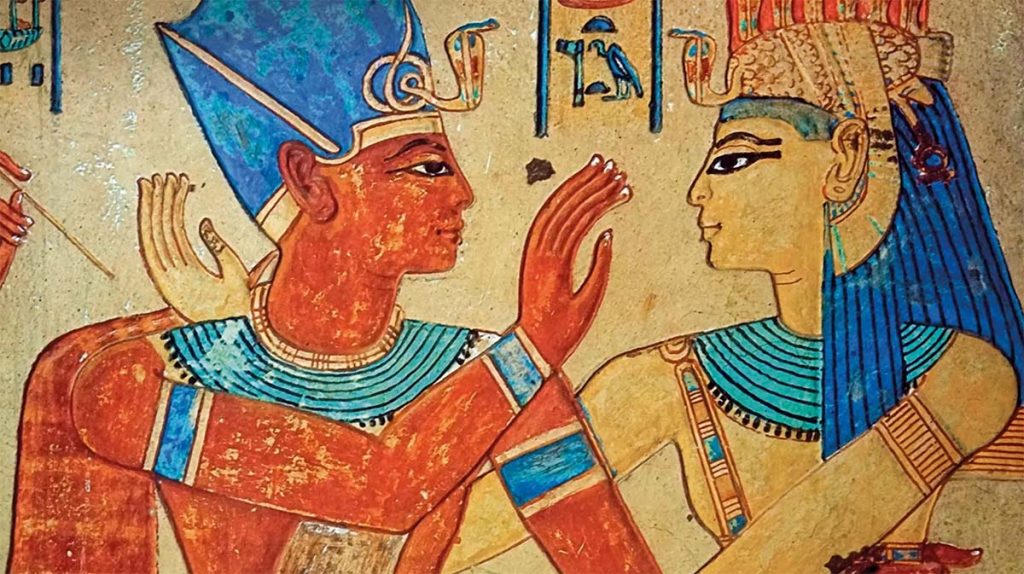

It was the encounter between these two gemstones that inspired The Secret of Berenice: the fresh, luminous green of the newly discovered peridot beside the deep purple of amethyst, a stone already associated with royal authority, divine favour and protection.
The necklace takes its form from an ancient precedent: a Roman gold necklace dating from the first century, found in Egypt and now in the collection of the British Museum (inv. 1917,0601.2749). Large amethyst cabochons alternate with green stones around the neck. Its rhythm of purple and green became the starting point for our own necklace, composed of eleven amethysts and ten peridots set in 18-carat yellow gold.
But the true marvel of Berenice’s jewel was revealed in the flicker of candlelight. Unlike emeralds, which darkened under artificial light, the peridot retained its vivid green hue, a secret only Berenice knew. And we think she kept it a secret because this hidden quality set her apart.