“When I first visited Sicily in my early twenties, I was mesmerised by the intensity of colour on the columns of the Monreale cloister. I never forgot them. When I returned to Sicily recently, I had to go back.”
Renilde Vervoort
The cloister of Monreale, completed around 1200, is one of the great survivals of Norman Sicily. More than two hundred paired marble columns support its pointed arches. Some are left plain; others are wrapped in bands of gold and coloured patterns that catch and change with the light.
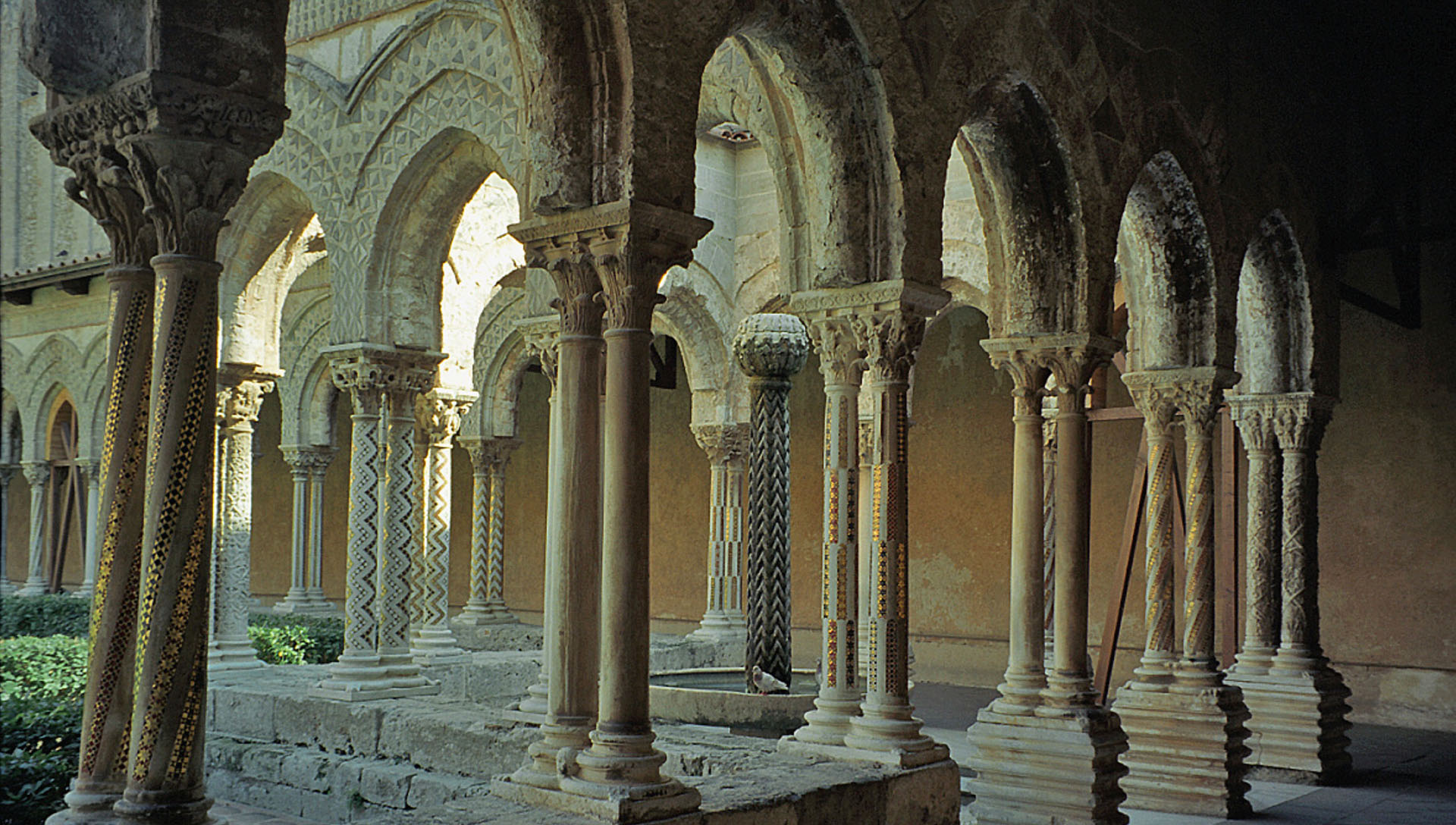
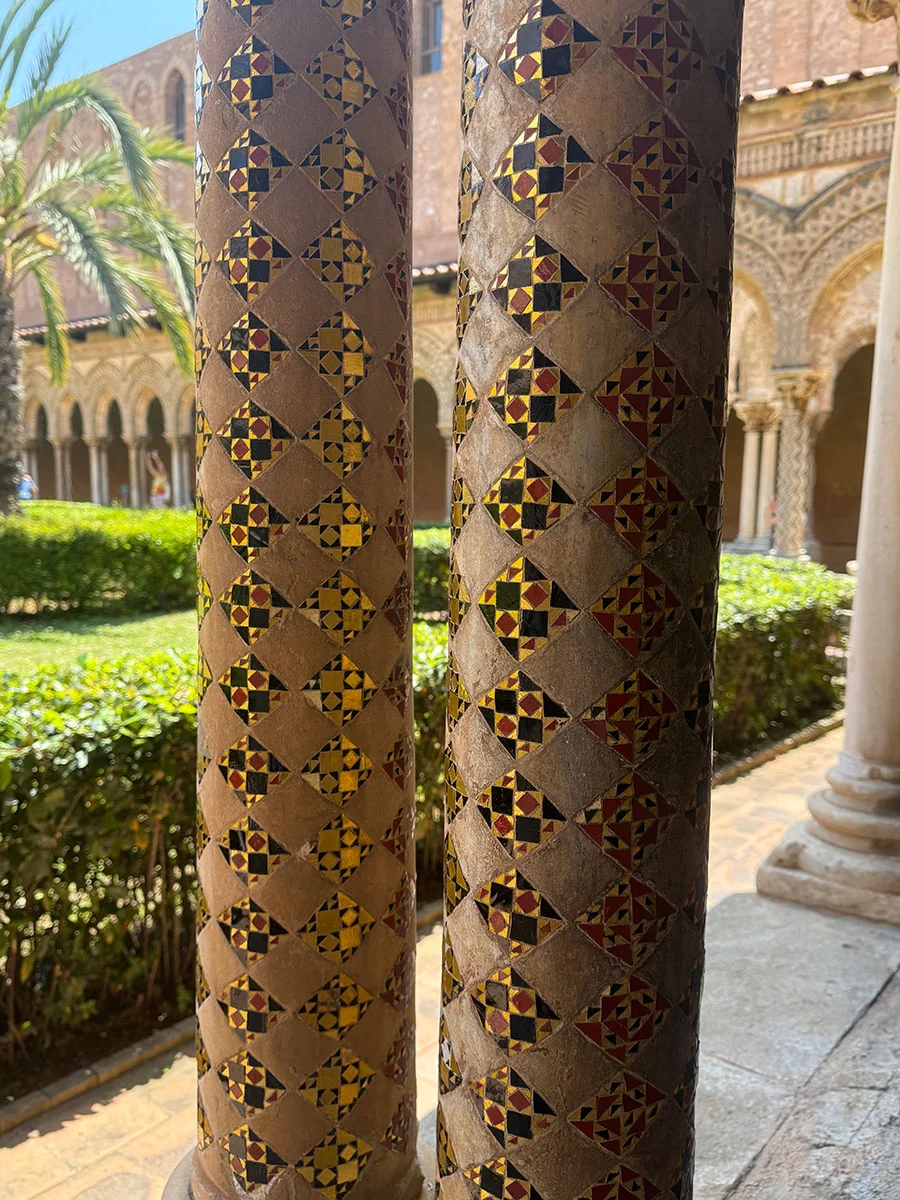
Those patterns are built from tesserae, the small pieces from which mosaics are assembled. In antiquity, tesserae were commonly cut from marble and limestone. Later, coloured glass expanded the palette, while Byzantine makers developed gold tesserae by enclosing gold leaf between layers of glass. The result was not simply a golden surface: light entered the glass and returned through the gold, producing an extraordinary luminosity. Years after that first visit to Monreale, the memory of those columns returned when we began working on a ring built entirely around colour.
Rather than reproducing the square geometry of a mosaic, we selected natural gemstones for their intensity and had them cut into sugarloaf forms. Their rising profiles allowed the colours to remain rich and luminous, while the sequence of stones around the ring recalled the alternating bands of colour on the Monreale columns.

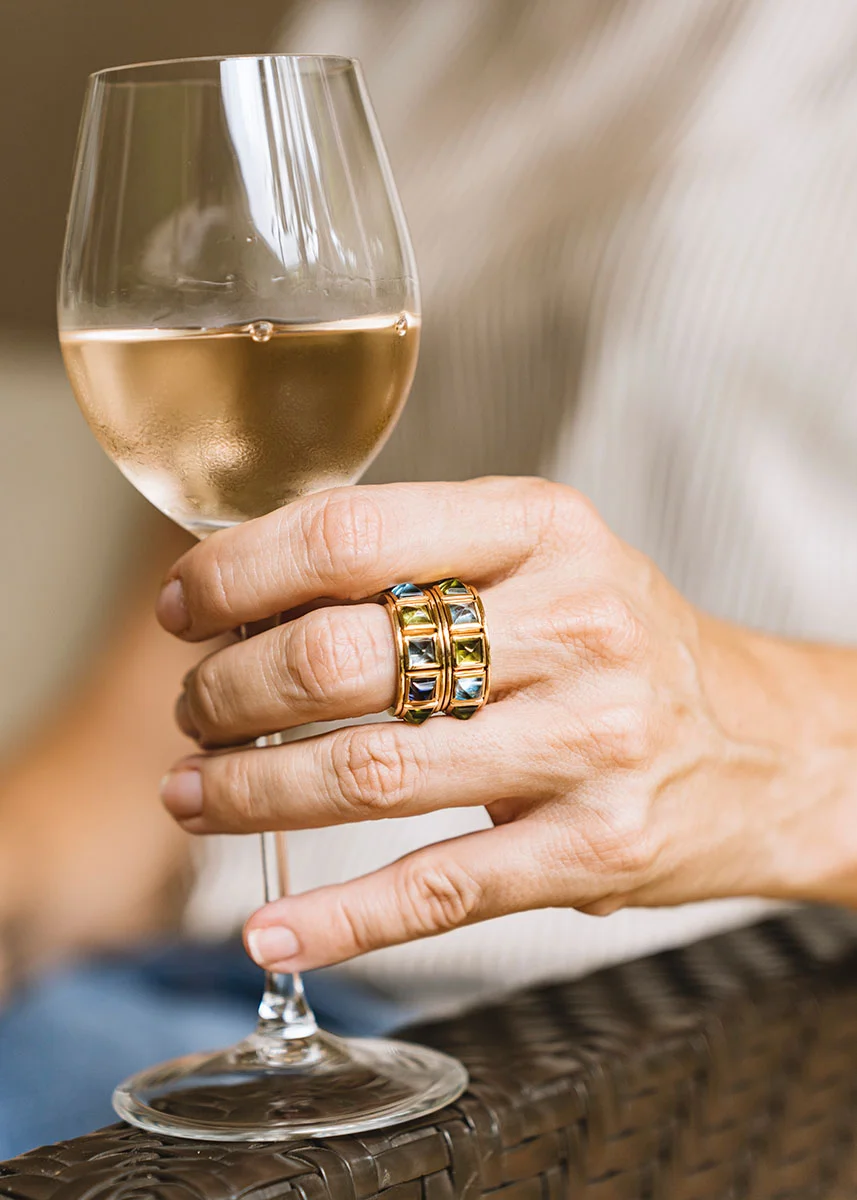
The gemstones are held in 18-carat rose gold within a rail-like construction that allows each stone to move freely in its setting. As the hand moves, the stones turn, the colours change position and the composition alters.
Colour was therefore never fixed within Tesserae. Like the glass and gold of Monreale, it was intended to respond to movement and light.