The story of the stirrup ring offers a fascinating glimpse into the development of jewellery following the fall of the Western Roman Empire. Roman jewellery left a substantial legacy, and many of its forms continued into the Middle Ages. Gradually, new designs appeared alongside them. Among the most distinctive was the stirrup ring, a type particularly associated with the twelfth to fourteenth centuries.
Its hoop rises steeply towards the gemstone, creating a striking profile reminiscent both of a horseman’s stirrup and the pointed arch of Gothic architecture. Stirrup ring appears to be a later descriptive name rather than one used in the Middle Ages, but seen from the side, the reason for the designation is unmistakable.
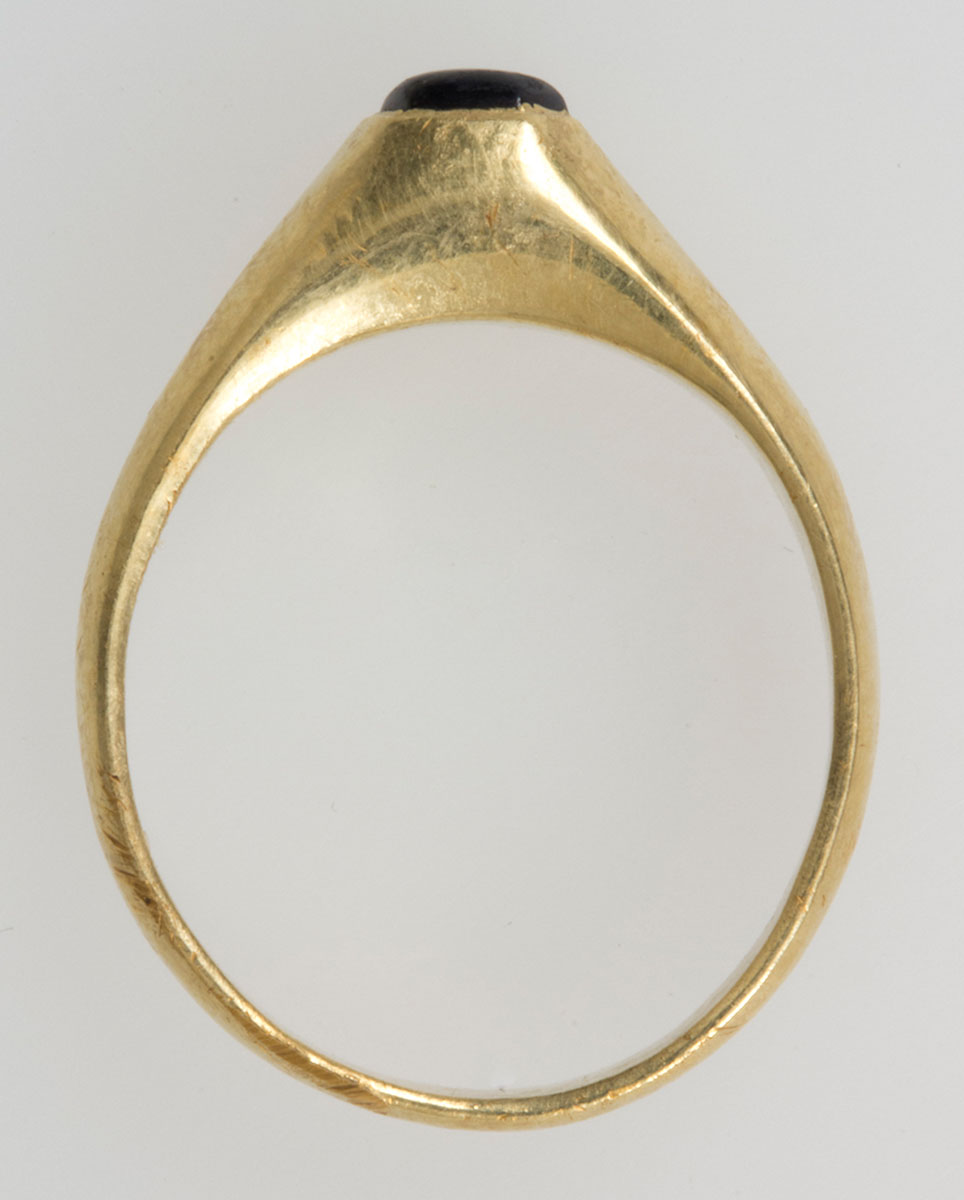
“While researching medieval rings, I noticed how many forms continued types already known from Roman jewellery. Then this one appeared. It was different. The name intrigued me and, seen from the side, it really does look like a stirrup. Of course I wanted to know more about the stirrup itself. The ring had led me into another history.”
Renilde Vervoort

Many surviving stirrup rings are set with sapphires. Medieval lapidaries had a great deal to say about this extraordinary stone. Sapphire was considered appropriate to kings and nobles, while its blue colour could direct the mind towards the celestial realm. It was credited with strengthening the body, reconciling discord and protecting its wearer from deceit, envy and poison. Some texts recommended it for ailments of the eyes and head and even prescribed that it should be worn in gold. For the medieval wearer, a sapphire could therefore be beautiful, medicinal, protective and spiritual at the same time. Rings set with the stone could carry meanings extending far beyond ornament and prestige.
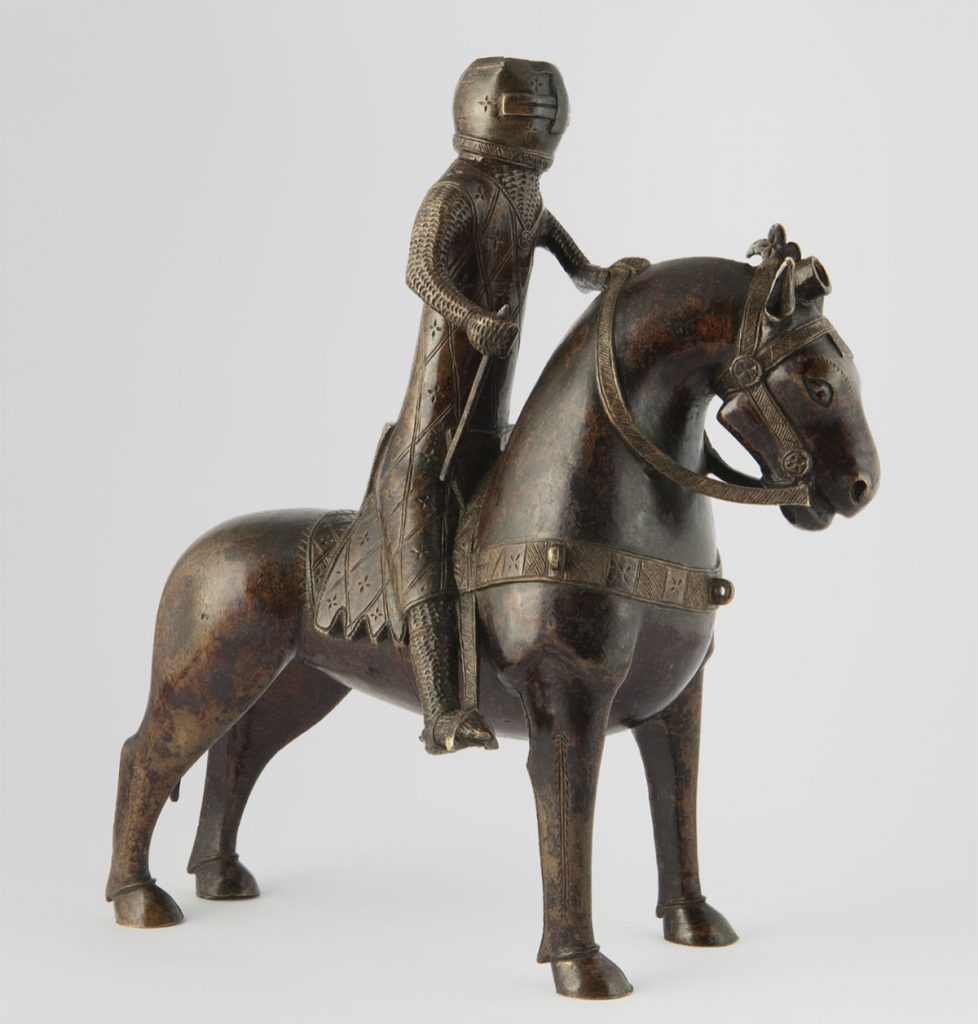
The stirrup itself appears to be a simple piece of riding equipment, yet its consequences reached far beyond horsemanship. Originating in Central Asia, early stirrups were used among nomadic horse cultures whose lives and warfare depended upon exceptional skill in the saddle. By giving riders greater stability and control, stirrups allowed weapons to be used more effectively from horseback and contributed to the growing importance of cavalry.
From Central Asia, the stirrup travelled eastwards. By the fourth and fifth centuries CE it was in use in China, Korea and Japan, where it became part of increasingly sophisticated traditions of mounted warfare. It reached Europe around the sixth or seventh century. Here, too, greater stability in the saddle increased the effectiveness of the mounted warrior. The knight became one of the defining figures of medieval Europe, occupying a privileged position within a society increasingly organised around a landed warrior aristocracy.
The consequences extended beyond the battlefield. Maintaining horses, weapons and armour required considerable resources, while military service became closely connected with land, privilege and obligation. The stirrup formed part of this transformation, contributing to the conditions in which the mounted aristocracy and feudal structures of medieval Europe developed. Few objects illustrate quite so well how a simple technological innovation can acquire consequences far beyond its original purpose.
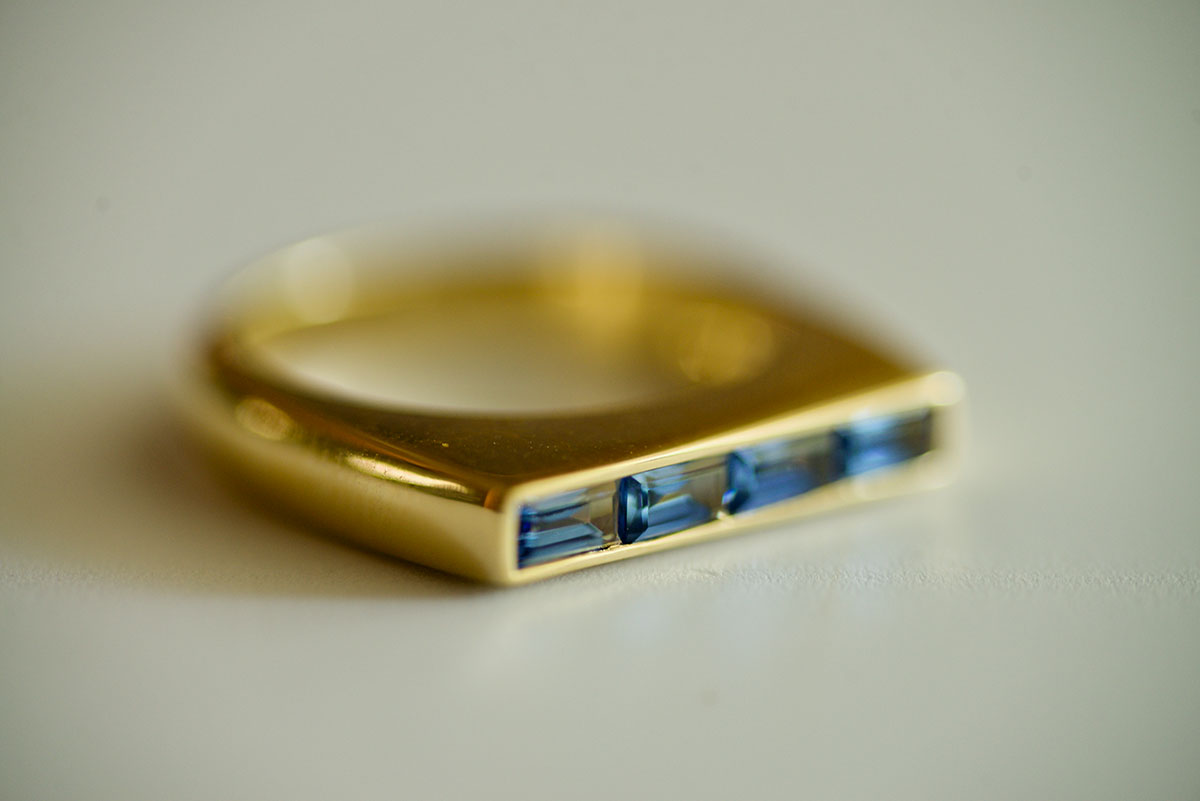
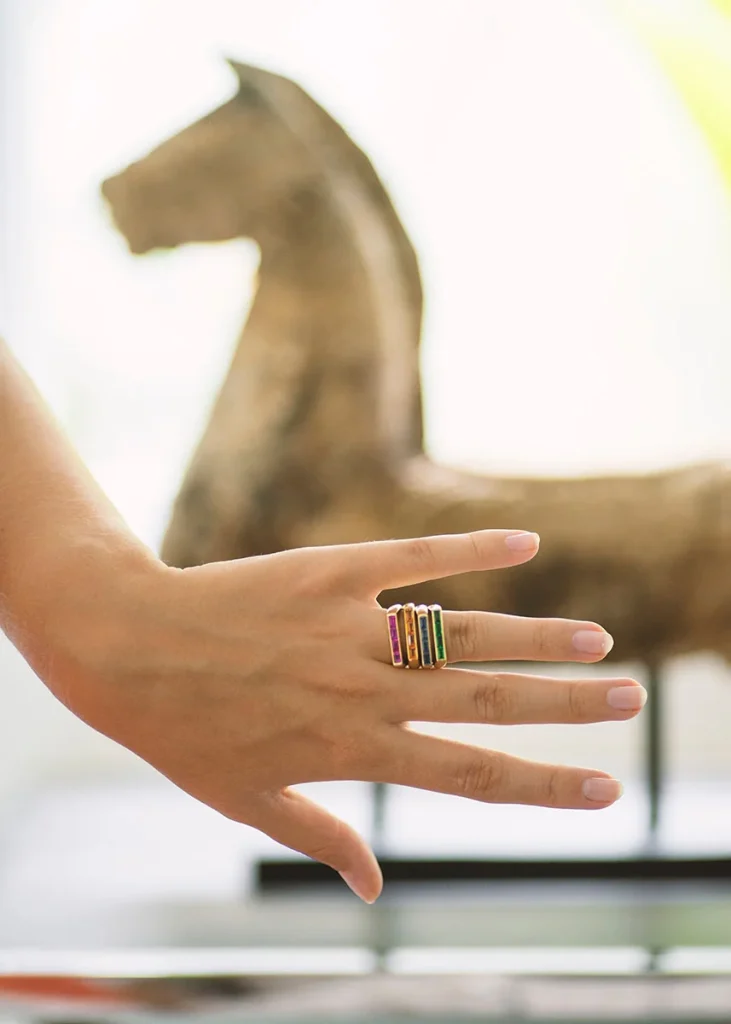
Our Staffa ring returns to the medieval form that began this story. We stylised its distinctive profile, retaining the steeply rising shoulders and the unmistakable silhouette of the stirrup.
Sapphire was the natural starting point. Alongside cornflower blue, we explored the remarkable range of colours found within corundum, including orange sapphire and ruby. An intense green tsavorite garnet, a gemstone unknown to the medieval world, introduces another colour into the sequence. The stones are set in 18-carat yellow gold. The rings can be worn individually or stacked, allowing their colours and rising profiles to form different combinations. We called the collection Staffa, the Italian word for stirrup.